Introduction: Why Electronic Contracts Matter More Than Ever
Imagine sealing a deal with a single click no paperwork, no courier delays, no in-person meetings. That’s the power of an electronic contract. Whether you’re hiring a freelancer, buying software, or signing up for a cloud service, chances are you’ve already entered an e-contract without even realizing it.
In today’s fast-paced digital economy, e-contracts are not just a convenience they’re a necessity. They offer speed, efficiency, and global reach, making them indispensable for businesses and individuals alike. But what exactly are they, and how do they hold up legally?
What Is an Electronic Contract?
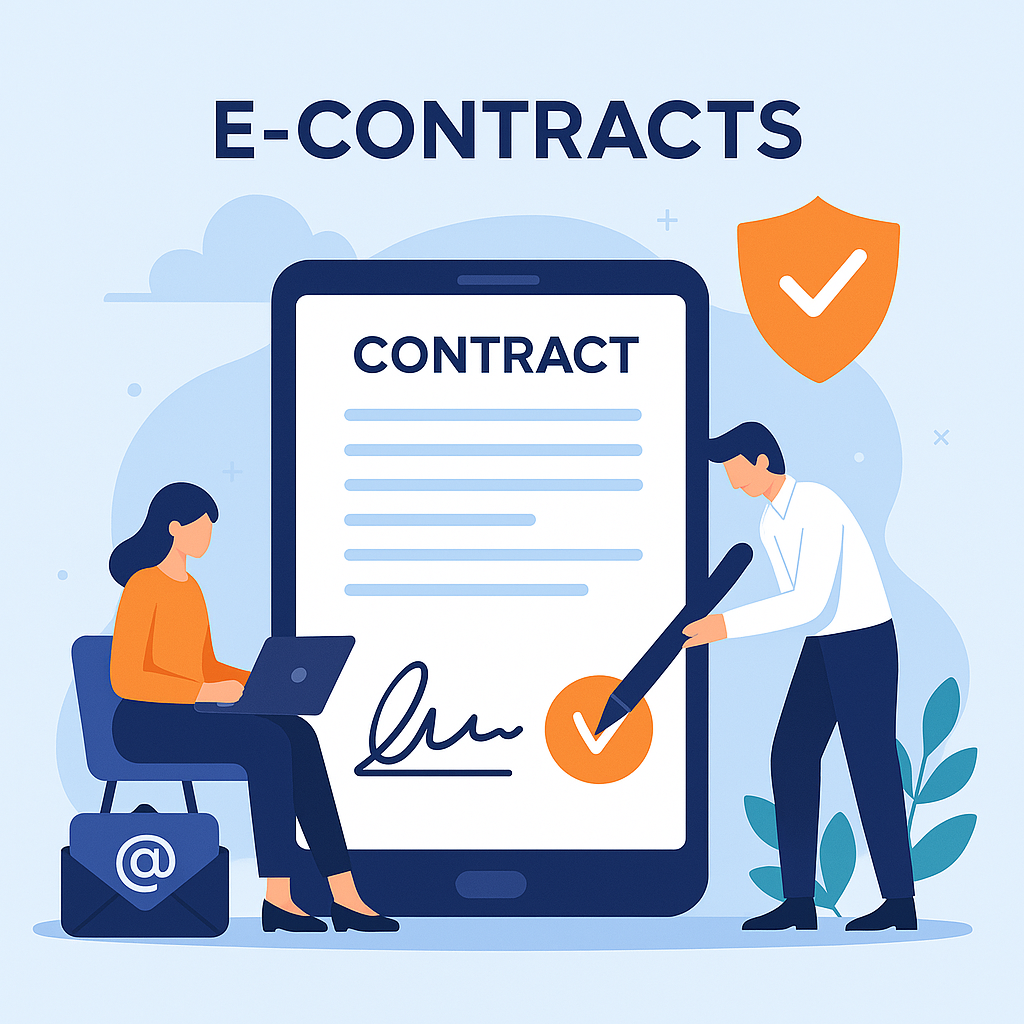
An electronic contract (or e-contract) is a legally binding agreement created, signed, and executed digitally. Unlike traditional paper contracts, these are formed through emails, web forms, or specialized platforms using electronic signatures.
Key Features:
- Digital formation: Created via emails, websites, or apps.
- Remote execution: Parties can be in different countries.
- Legally enforceable: Recognized under laws like the Indian Contract Act, 1872 and the IT Act, 2000.
Electronic Contract Examples in Everyday Life
| Scenario | Type of E-Contract | Platform Used |
| Buying software online | Clickwrap Agreement | Microsoft, Adobe |
| Freelance project deal | Bilateral E-Contract via email | Upwork, Freelancer |
| Accepting website terms | Browsewrap Agreement | Amazon, Flipkart |
| Installing an app | Shrinkwrap Agreement | Mobile apps, games |
| Blockchain-based deal | Smart Contract | Ethereum, Solana |
These examples show how e-contracts are woven into our digital routines from casual browsing to high-stakes business deals.
Fresh Perspectives: Beyond Convenience
While most blogs stop at listing types and legal provisions, let’s go deeper:
1. E-Contracts as Trust Builders
In a remote-first world, e-contracts offer a structured way to build trust. Clear terms, timestamps, and audit trails reduce ambiguity and foster accountability.
2. Personal Experience: Freelancing Made Safer
As a freelance writer, I once had a client ghost me after delivery. Since we had a signed e-contract via DocuSign, I was able to escalate the issue and recover payment. That single document saved weeks of stress.
3. Smart Contracts: The Future Is Autonomous
Smart contracts on blockchain platforms execute themselves when conditions are met. For example, a rental agreement could automatically release payment once the tenant checks in—no human intervention needed.
Legal Validity & Challenges
📜 Legal Recognition
- Indian Contract Act, 1872: Governs offer, acceptance, consideration, and capacity.
- Information Technology Act, 2000: Section 10A validates contracts formed electronically.
- Indian Evidence Act, 1872: Section 65B allows electronic records as admissible evidence.
⚠️ Common Challenges
- Jurisdiction issues in cross-border contracts.
- Authentication concerns with electronic signatures.
- Data privacy risks in cloud-based agreements.
Comparison: E-Contracts vs Traditional Contracts
| Aspect | Traditional Contracts | Electronic Contracts |
| Speed | Slow | Instant |
| Accessibility | Location-bound | Global |
| Cost | High (printing, courier) | Low |
| Security | Physical signatures | Encrypted e-signatures |
| Legal Validity | Well-established | Growing recognition |
Best Practices for Using E-Contracts
- Use trusted platforms (e.g., DocuSign, Adobe Sign).
- Ensure clear terms and mutual consent.
- Verify identity before signing.
- Attach e-stamp certificates where required.
- Store contracts securely with version control.
Conclusion: E-Contracts Are Here to Stay
Electronic contracts are more than a digital alternative they’re a strategic asset. They streamline operations, reduce friction, and offer legal protection in a borderless world. Whether you’re a startup founder, freelancer, or legal professional, embracing e-contracts is no longer optional it’s essential. E-contracts aren’t just about speed they’re about trust. When thoughtfully designed and legally sound, they become more than documents; they become instruments of fairness, transparency, and progress. As someone who’s worked across legal drafting and digital advocacy, I’ve seen firsthand how e-contracts can empower both businesses and individuals especially in remote or fast-paced environments. But their adoption shouldn’t be blind. We must balance convenience with caution, ensuring clarity, consent, and compliance at every step.