
INTRODUCTION
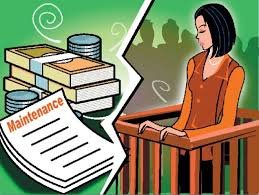
Maintenance is the right which is provided under personal laws to guarantee financial security of the spouses, children, and dependents. Maintenance is not only an ethical requirement; it is a legal right, as per Hindu law, which is created to protect those individuals who cannot support themselves because of different reasons like unemployment, disability, or other social factors. Maintenance is simply a sum of money given by an individual to another, usually a husband to his wife, or a parent to his children. It pays bills like food, clothing, shelter, health care, and other basic living needs to be able to live with dignity.
Maintenance is very crucial as it is the assurance of the well-being and dignity of the people who are financially dependent on others. The right to maintenance is a judicial right that secures wives, children, and other dependents against neglect and destitution in the Hindu personal laws. It understands that there is a cost in relationship, whether in the form of marriage, parenthood or family and not emotional bonds.
Hindu Marriage Act, 1955 and Hindu Adoptions and Maintenance Act, 1956 provide certain provisions that empower people, particularly women and children to seek financial assistance in situations where they cannot sustain themselves. These acts are aimed at fostering justice, temporary remedy in the course of the law and a long run sustainability following the process of separation or divorce.
The right to maintenance is an important means of promoting justice, equality and human dignity in a society where economic reliance may restrict personal freedom and security. This blog discusses the legal provisions, eligibility, questions, and meaning of maintenance according to the Hindu personal law.
LEGAL FRAMEWORK UNDER HINDU LAW
Under the Hindu law, the right to maintenance is well established in the statutory provisions that seek to give the family members who are in need of financial support the dignity and security they deserve. There are two large legislations that mainly dictate these provisions:
Hindu Marriage Act, 1955 (HMA)
The Hindu Marriage Act has clauses that assist marital partners, wives in particular, to pursue maintenance before and after getting married.
Section 24- Interim Maintenance and Litigation Expenses.
This is in case of a temporary provision of money to a spouse during the time of matrimonial proceedings in a court of law. It makes sure the wife or husband will be able to afford to sustain and be able to cover legal costs of the case.
Section 25 Permanent Alimony and Maintenance.
The court is allowed to grant permanent alimony or maintenance after the last decree of divorce or separation. The choice is made depending on the income, property, standard of living and behaviour of both the spouses. The payment may be in lump sum or in installments based on the conditions.
Hindu Adoptions and Maintenance Act, 1956 (HAMA).
This Act widens the area of maintenance to other dependent family members and extends it beyond marriage relationship.
Section 18 – Maintenance of Wife
The marriage law requires a Hindu husband to sustain his wife in case she cannot maintain herself. The commitment is in spite of the place where the wife may be, provided that she is not living in adultery or has not renounced the world.
Section 20 Maintenance of Children and other Dependents.
A father has the duty of supporting his minor offspring, born or otherwise and even the dependant family members like the aging parents in case they do not have the ability to take care of themselves.
WHO CAN CLAIM MAINTENANCE?
Right to maintenance in Hindu personal laws is not restricted to one group of people. It spreads to other family members who are in need of money as they cannot sustain themselves. The law acknowledges their susceptibility and puts an obligation on the reliable members of the family, mostly the husband or father, to take care of their most fundamental needs.
Wife
A wife is the main one to claim maintenance as long as the marriage is subsisting and even when the marriage is separated or divorced, as long as she cannot maintain herself. The law makes sure that she is not left penniless, particularly when she has no independent means of living or cannot work because of health, childcare or social restraint.
The following are some of the situations under which a wife may allege maintenance:
Desertion by the husband
Separation caused by cruelty or abuse.
Matrimonial divorce or annulment.
Inability to work, either physical or mental.
Children
Children are entitled to receive maintenance by their father whether legitimate or not. The obligation extends to minors and in a few instances, to adult children incapacitated physically and mentally to earn or take care of themselves. Maintenance is used to make sure that their upbringing, education and healthcare is well taken care of.
Who qualifies as a child?
Younger children of the marriage.
Children born out of wedlock.
Children that are dependent in need of care and support.
Dependent Relatives and Parents.
The children are entitled to maintain their aged or infirm parents who are unable to take care of themselves. On the same note, other dependent relatives like siblings or unmarried sisters are entitled to maintenance since they have no form of livelihood.
Key points:
The responsibility also applies to parents regardless of whether they are resident or not.
It is the dependency that is of concern, rather than the nature of the relationship itself.
Maintenance is granted in relation to the real need and ability by the courts.
Important Conditions
✔ The claimant has to demonstrate that he is not able to make a living.
✔ The income, lifestyle and responsibilities of the provider are put into consideration.
✔ Maintenance does not always automatic–it depends upon circumstances.
✔By making sure that they are properly documented and investigated, the courts dishearten frivolous or false claims.
Maintenance is a legal recognition of family responsibility. It avoids dumping, enhances social welfare and making sure vulnerable groups in the society do not have to struggle alone, particularly when marriages fail or when there is an economic downturn.
GROUNDS FOR CLAIMING MAINTENANCE
The Hindu personal laws do not require maintenance to be given automatically and it can only be given in certain cases. The law acknowledges the fact that not all people are in a situation to support themselves and offers a systematic method to become the recipient of financial assistance. The typical bases of the claims of maintenance include:
Lack of Self Maintenance
The least profound basis is the incapability of the claimant to provide himself. When a wife, child, or a dependent relative do not receive adequate income or resources to finance their basic needs such as food, shelter and healthcare, then they have a right to claim maintenance.
Example:
A wife who has no means of earning or whose means of earning are no longer possible as a result of illness may seek maintenance through the husband.
Desertion or Abandonment
Wife may take maintenance in case the husband leaves or abandons her without justifiable reason. Desertion would mean that the husband has abandoned the wife and not supported them or give any reasons.
Example:
Any husband who abandon the marital home and denies supporting his wife is legally bound to maintain her.
Cruelty or Harassment
Cruelty that is done to a spouse mentally or physically may be used as a basis of separation and maintenance. In such cases, courts usually weigh the safety and dignity of the claimant as it grants maintenance to the claimant.
Example:
A victimized wife may receive maintenance in the process of a legal action and even after separation.
Divorce or Court Separation
During the divorce process, a wife has the right to maintenance as well as after the decree. The court does an assessment of her conditions including the fact that she does not have a source of income and how she contributes to the household in the marriage.
Example:
In the case of divorce, a wife with no property or source of earnings can be a permanent alimony as stipulated in Section 25 of the Hindu Marriage Act.
Physical / Mental Incapacity
Maintenance is a right in case the claimant cannot earn either physically or mentally. This is applicable to wives as well as children and a dependent relative.
Example:
A mental ill parent or a crippled child might need life time maintenance in order to survive and be attended to.
Unemployment or Financial Strain
Maintenance may be granted on either a temporary or long-term basis when the claimant is not working, has no livelihood, etc. Interim support may be ordered by the courts when they wait to secure employment opportunities.
Example:
The maintenance can be imposed on a husband who loses his job and cannot support his family depending on his previous income or properties.
Pregnancy and Childcare
A wife might fail to work during pregnancy or when taking care of a small child. These caregiving responsibilities are considered by the courts when determining the claims of maintenance.
Example:
A wife with an infant can be awarded maintenance until the child is old enough to have his or her care shared or outsourced.
Key Takeaways
✔ Maintenance is only provided in case there is real financial need that is established.
✔ Courts consider the needs of the claimant as well as the provider capacity.
✔ Reasons comprise desertion, cruelty, incapacity, unemployment and divorce.
✔ There are stages at which interim and permanent maintenance are offered.
✔ It is done with an aim of making sure that there is dignity and basic support and not enrichment.
LIMITATIONS AND CHALLENGES
Although, the right to maintenance as a Hindu law is a vital legal framework that offers a legal buffer, there are a number of difficulties and constraints to its application. These tend to deny the deserving claimants the opportunity to receive the necessary support in time and in adequate measure, making the law ineffective in its application.
Lack of Awareness
The rights of women and dependents to claim maintenance, and the process itself are little known to many women and dependents. This illiteracy of the laws does not allow them to claim anything or request the court to intervene particularly in the rural or less economically strong areas.
Challenge:
People are afraid to claim their right, fear social stigmatization or simply cannot reach legal assistance.
Proof of Dependency
Claimants must demonstrate how they cannot sustain themselves and the provider is able to sustain them. Where the husbands income is concealed or inconsistent then dependency is hard to prove.
Challenge:
Maintenance claims can be turned down or postponed in the absence of proper documentation such as income certificates, bank statements or employment records.
Delays in Judicial Process
The processes of court proceedings can be time consuming and thus there is a lot of delay in either interim or permanent maintenance. Lengthening court proceedings can be more financially and emotionally stressful to the already disadvantaged claimants.
Challenge:
Interim maintenance orders are likely to be months long and permanent awards are unlikely to be enacted on time.
Caution Under-Claiming or Under-Awards
Claimants particularly are paid less than they are owed especially because of financial pressures, intimidation, or even social pressures. The amounts allocated by the courts are also in other times not commensurate to the actual needs or cost of living of the claimant.
Challenge:
Maintenance orders might not reflect inflation, lifestyle demand, and future medical and educational requirement.
Caution: Modifying Gender roles and Social norms
As women are entering the workforce in higher numbers, the courts are becoming very critical of a claim thereby expecting the claimant to be self-sufficient. Although this will foster economic independency, it might fail to account to situations like childcare, health problems, or discrimination at the work place.
Challenge:
It is not easy to balance between fairness between spouses without punishing those who are in the caregiving role.
Enforcement Issues
Regardless, enforcement of maintenance is quite problematic even when the court has ordered it. Lack of regular or even payment are common to many claimants and this results in additional litigation.
Challenge:
Remedies are available in the form of law and need constant follow-ups, which may be tiring and costly to the claimant.
In spite of these difficulties, maintenance provisions are an important instrument in safeguarding the disadvantaged in the society. The enhancement of legal services, streamlining of processes and awareness creation can go a long way in making sure that the right to maintenance is well met.
CONCLUSION
Maintenance under Hindu personal laws is an essential protection that guarantees financial stability and respect to wives, children and dependent family members. It demonstrates the kind of responsibility that family relations bear and supports the idea of fairness in the situations of vulnerability. The law acknowledges that dependency is not weakness but a situation, which must be protected with provisions made in the Hindu marriage act and in Hindu Adoptions and maintenance act.
Nevertheless, issues of unawareness, the struggle to establish dependency, judicial slowness, the uncooperative enforcement system are known to deny a deserving claimant timely and enough assistance. To navigate these obstacles with the help of legal changes, popular education, and more effective enforcement tools is necessary so that maintenance becomes an available and feasible right.
Conclusively, maintenance is not only about money but about acknowledgement of dignity, equality and compassion in the family set-ups. An effective and just system of maintenance reinforces social relationships and gives people the ability to live without fear of being left behind or living in poverty.