
INTRODUCTION
Women’s Protection Law from Domestic violence is one of the most widespread but least reported type of human rights violation in the world. The problem is especially serious in India, where social norms, stigma, and economic dependence tend to more than silence victims of abuse in their households. Historically, domestic violence was a personal issue to which women had no effective legal rights and solutions. Even though the BNS, 2023 provisions such as Section 85 and 86 were an attempt to curb cruelty by husbands and their family members; these provisions were not extensive to include other types of abuse, such as verbal, emotional, sexual, and economic violence.
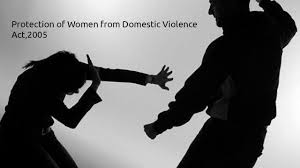
It was against this backdrop that the Protection of Women from Domestic Violence Act, 2005 (PWDVA) Protection of Women from Domestic Violence Act, 2005 was enacted as a landmark piece of social legislation. Unlike previous laws that were primarily punitive, this Act adopts a rights-based and holistic approach to protection. It defines domestic violence in broad terms, recognizing not only physical harm but also psychological and financial abuse as serious violations. The Act aims to secure immediate relief for women through civil remedies such as protection orders protection orders , the right to reside in a shared household, monetary support, and custody of children custody of children.
The PWDVA demonstrates the gender justice of India because of placing the safety of the women in the context of the constitutional rights of women to life, dignity, and equality. It fills the gap between the idealized constitutional and lived realities so that women could seek legal redress over abuse in the most personal of places- home. More to the point, it is an indication of a change in the responsibility of the state, namely, violence in the home becomes not a domestic problem but a social concern that can be addressed by the law.
UNDERSTANDING DOMESTIC VIOLENCE UNDER THE ACT
The Protection of Women against Domestic Violence Act, 2005 (PWDVA) adopts a rights based approach to the issue of abuse in a household. The Act is unlike the traditional criminal provisions that mainly dealt with punishing physical cruelty as the new law acknowledges the various forms of domestic violence that can equally be devastating to women.
1. Definition of Domestic Violence
Domestic Violence is defined as any type of abuse perpetrated by one party against the other(s) in a situation where the relationships are characterized by a close bond or cohabitation.
Domestic violence by the Act is not restricted to physical assault. It encompasses:
- Physical abuse: Those actions that lead to bodily harm, injury, or risk of life, limb, or health.
- Sexual abuse: any sexual behaviour that is against dignity or autonomy such as marital rape (where it is against the law) and sexual harassment.
- Verbal and emotional abuse: Insults, humiliation, intimidation, threats and controlling behaviour which leads to mental harm.
- Economic abuse: Deprivation of money, property rights or even access to basic needs, which can cause the woman economically dependent to the abuser.
2. Scope and Applicability
The Act concerns women in domestic relationships such as:
- Spouses and former spouses.
- Live-in partners.
- Family members in the extended family.
- Others in relationships similar to marriage.
Such a wide area covers the fact that, regardless of whether the women are in a marriage that is legalized or not; they are covered in all the areas that they might be abused.
3. Civil Remedies Provided
PWDVA also stresses on immediate relief and protection, and not just punishments. Key remedies include:
- Orders that the abuser cannot perpetrate any more violence.
- Residence orders guaranteeing the right of the woman to stay in the common home.
- Financial compensation to meet loss of earning, hospital and maintenance costs.
- Child custody to protect the wellbeing of children.
- Order of compensation of injuries or emotional trauma.
4. Rights-Based Framework
By categorizing domestic violence as a denial of basic rights, such as the right to life, dignity, and equality, the Act puts the state as an agent of safeguarding women right and thus, domestic violence becomes a national issue and not a family issue.
KEY FEATURES OF THE PWDVA, 2005
The Protection of Women form domestic Violence Act 2005 (PWDVA) is a rights based and comprehensive legislation that aims at protecting women against different forms of domestic violence. Its key features include:
1. General Statement of Domestic Violence
Abuse in the Act extends to cover sexual, emotional, verbal and economic abuse in that harm can be of various forms and that psychological and financial oppression can be as harmful as physical violence.
2. Wide Applicability
The Act ensures that women are safeguarded in all kinds of domestic relations and not only in the well-established marriages. This includes:
- Spouses and former spouses
- Live-in partners
- Family members in the co-habiting family
- Dysfunctions similar to marriage
3. Civil Nature of Relief
PWDVA is a civil provision system unlike criminal provisions, which are concerned with penalizing, hence its emphasis on offering brief relief and protection to women. These remedies include:
- The orders that prohibit the abuse to be perpetuated by the abuser.
- Residence orders that guaranteed the woman to live in the joint household.
- Financial compensation on loss of earnings, medical expenses or upkeep.
- Children and other dependent custody orders.
4. A focus on Short-term and Rapid Relief
The Act also allows Magistrates and Protection Officers to take urgent measures to avert additional injury as domestic violence cases are urgent.
5. Protection Officer and Service Providers Role
PWDVA has a system of Protection Officers, counsellors, and service providers to work with the victims, guarantee the orders enforcement, and provide them access to the legal, medical, and financial support.
6. Rights-Based Approach
The Act is in line with essentially guaranteed rights by the Constitution especially the right to life, dignity and equality. It makes domestic violence a social issue and makes the issues of domestic dispute to be the state matters rather than family issues.
7. Concentrate on Mediation and Counselling
Although protection is the priority, the Act does promote mediation and counselling to amicably solve the disputes wherever the need be without jeopardizing the security of the victim.
JUDICIAL INTERPRETATION AND IMPACT
Protection of Women against Domestic Violence Act 2005 (PWDVA) has faced considerable judicial interpretation that has assisted in the interpretation of the scope of the act as well as its reinforcement in application. India Courts have repeatedly pointed out that the Act is remedial and protective in nature, which is supposed to provide relief to the women immediately as opposed to punishing the offenders.
1. Broad Construction of the term domestic violence
The meaning of domestic violence has been expanded by the courts who have included physical, sexual, verbal, emotional and economic abuse. The Supreme Court, in Indra Sarma v. V.K.V. Sarma (2013), acknowledged that live-in relationships are subject to the domestic relationships clause of the Act and so such relationships are also covered by protection.
2. The Protection Orders and Residence Rights
The courts have strengthened the view that protection and residence orders under PWDVA are not optional as the evidence depicts abuse. Courts have also determined that the right to live in the common household is the basic right to guarantee the safety and dignity of women.
3. Financial and Money release
Judicial has emphasized that the Act provides importance to monetary relief and maintenance. In one instance, a court has ordered husbands or family members to offer financial assistance to the victims so that as much as physical and emotional damage, the economic abuse can be resolved too.
4. Procedural Flexibility
The speed and brevity of proceedings under the Act has been highlighted by the courts. Protection Officers, Magistrates and service providers are given the power to take actions promptly, as it has been established that redress delays may increase damage.
5. Societal Impact
The PWDVA enforcement in courts has affected the society significantly. It has moved the domestic violence issue beyond a family problem to a state problem, establishing legal precedence of the non-physical abuse, and empowering women.
6. Corporation to Constitutional Rights
Judicial interpretations continuously associate the protections of the Act with basic rights that are guaranteed by the Constitution especially the right to life (Article 21), equality (Article 14) and protection against discrimination (Article 15), and thus help to strengthen its legitimacy and effectiveness.
PWDVA has been transformed as a potent instrument to the protection of the rights of women, an action covering the spectrum of abuse, and availing of legal answers to be effective and efficient and reflective of the reality of domestic violence through judicial interpretation.
CHALLENGES IN IMPLEMENTATION
In spite of the progressive structure of the Protection of Women against Domestic Violence Act, 2005 (PWDVA), the successful adoption of the law still has a number of obstacles:
1. Consciousness and Availability
In the rural areas and marginalized groups, many women are not aware of their rights according to the Act. Ignorance of the fact that Protection Officers, service providers, and legal remedies exist to assist victims is a factor that does not allow them to seek help.
2. Delay in Relief and Legal Processes
In spite of the fact that the Act is intended to be used to provide quick and brief procedures, in reality, the delays are usually encountered because of the overcrowded courts, complicated procedures, and insufficient number of Protection Officers. These delays may compromise the success of protection and relief efforts.
3. Enforcement of Orders
Protection, residence, or monetary orders may not be very effective even with their enforcement. The failure of the abuser to comply, failure to coordinate the authorities and failure to have adequate monitoring mechanisms constrain the practical effects of the Act.
4. Poor Training of Authorities
PPO, judicial staff, and policemen are not always trained to treat domestic violence in a sensitive manner. A lack of understanding of the provisions of the Act may lead to a lack of proper treatment of the complaints, blame victimization, or even impoliteness to grant protection orders.
5. Barriers in Society and Culture
Women are often frightened of being socially ostracized and deep-rooted patriarchal norms and stigma discourage women to report abuse. The victims can be pressured by their families to settle the cases by their own and this minimizes the efficacy of lawful solutions.
6. Economic Coercion and Dependency
Most of the women are economically reliant on the abuser thus they are not in a position to take legal charges or abandon abusive families. The Act acknowledges such economic abuse, which is frequently difficult to establish or successfully solve.
7. Poor Co-integration with other Support Services
Although the Act envisages such support via counselling, shelter and legal assistance, lack of infrastructure and co-ordination between courts, Protection Officers, NGOs and other service providers does exist.
Although PWDVA has been a ground breaking act, these implementation issues have underscored the fact that systemic changes have to be changed, more awareness created, specialized training, and improved resource distribution should be made to see the rights and protections that are given under the Act, be realized in a full sense.
THE ROAD AHEAD
The Protection of Women from Domestic Violence Act, 2005 (PWDVA) has provided a firm legal foundation to serve the women, yet the full potential is likely to be achieved by enhancing its enforcement and encompassing more people in society. Fostering a culture of zero tolerance towards domestic abuse can be achieved by increasing awareness of women rights and possible remedies, and community-specific education campaigns can help create awareness about the issue. Enhancing institutional responses through improving training and coordination of Protection Officers, police, and judicial authorities will result in quicker and additional efficient enforcement of protection, residence, and monetary orders. Access to more shelters, counselling, legal help and funding would allow women to act without fear of social or financial reprisals. It is essential to focus on solving the economic dependency by offering vocational opportunities and social empowerment programs along with engaging the community to fight the patriarchal traditions. Another way to reduce accessibility disparities, particularly in remote locations by capitalizing on technology can be through online grievance platforms and helplines. Also, the Act will be responsive to modern times with legislation updated periodically to prevent new manifestations of abuse such as cyber harassment. The future of the PWDVA is, however, found in the integrated solution, which integrates legal protection, social change, and systemic assistance, so that women will be able to stay in their own homes and live safely and in dignity.
CONCLUSION
The Protection of Women from Domestic Violence Act, 2005 (PWDVA) is a monumental move in the Indian context as far as gender justice is concerned since it aims at turning the issue of domestic abuse into a social issue. The Act enables women to enforce their rights in the house by identifying physical, sexual, emotional, verbal as well as economic abuse and ensuring civil remedies in the form of protection, residence, financial support and custody orders. The judicial interpretations have also broadened its scope which has strengthened it as a remedial and protective law. But issues of awareness, implementation, social beliefs and the dependency in the economy still inhibit its maximum effects. The future of the road needs a multi-dimensional strategy, involving proper enforcement of legal systems, social consciousness, ready support agencies, and internal reforms in order to make sure that all women could live without violence, with dignity, safety, and equality.