
INTRODUCTION
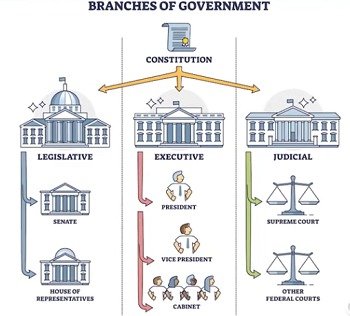
The doctrine of Separation of Powers has been significant in India to balance between and among Legislature, Executive and Judiciary so that a particular organ does not overrule a whole governance system. The Indian Constitution does not make any mention of the doctrine, but it adopts parts of it in its letter by allowing its spirit to be embodied in its numerous provisions creating de facto separation, but not one of de jure. This is an approach that strongly shows the realities of a parliamentary democracy where there is inevitably some degree of overlapping to facilitate an effortless administration but nonetheless each organ is constrained to work within its constitutionally defined scope.
The Legislature consisting of Parliament at the Union level and State Legislatures is the principal law-making body. Executive consisting of the President or Governor and his/her council of ministers is the body which implements those laws. The Judiciary- which is headed by Supreme Court and High Courts and exercises the powers of judicial review of the law under Articles 32 and 226 on protecting the Constitution.
Indian courts especially in a landmark case: Kesavananda Bharati v. State of Kerala(1973) and Indira Nehru Gandhi v. Separation of powers has been deemed to be a part of the basic structure doctrine by Raj Narain (1975) and is therefore, not subject to constitutional amendment that may dilute its role. Through this, the doctrine acts as a constitutional defence mechanism, keeping the government with democratic accountability and avoiding centralisation of power and holding the government rooted to the rule of law.
MEANING AND SCOPE
Separation of Powers is a doctrine that is used to define the separation of the powers and functions within government into three distinct branches, namely, Legislature, Executive, and Judiciary, so that each organ plays its unique role without infringing on the jurisdiction of the others. Its main purpose is to bar the ability to concentrate authority into the control of a body with a view to protecting liberty, guaranteeing accountability and the rule of law.
The separation in its purest form as in the U.S. Constitution is strict the legislative enacts the laws, the executive carries out the law, the judicial interprets the law and executes the law. But in India it is a functional separation not an absolute one and to an extent there can be overlapping of the three organs and exercise interaction of the three organs according to the practical needs of a parliamentary democracy.
Indian constitution incorporates this guideline in:
Making and implementation of laws by parliament and State Legislatures (Articles 79 & 168).
The President and Governors were endowed with executive powers (Articles 53 & 154).
Articles 124, 214 gives judicial powers to Supreme Court and High Courts.
There still remains some overlap in powers, e.g. the Executive is involved in law-making under Articles 123 and 213 in the form of an ordinance, and the Judiciary issues directions that have a quasi-legislative effect. The domain of the doctrine in India, thus consists in keeping the frontiers of institutions within their prescribed sphere leaving scope to attain co-operation as much as to sustain that there is no organism transcending its constitutional area or infringing on the rights of some other organism.
SEPARATION OF POWERS IN THE INDIAN CONSTITUTION
The doctrine of separation of power is not explicitly mentioned in the Indian Constitution; nevertheless, the structure of the body is created in a manner that makes the division of power functional between the Judiciary, the Legislature, and the Executive Layer. This segregation is echoed in the form of clear constitutional powers and duties assigned to each of the organs as well as incorporation of checks and balances that serve the purpose of preventing the overextension of power.
1. Legislative Powers-Vested in the Parliament (at the Union level) and the legislatures of the States (at the State level) under Articles 79-122 and Article 168- 212. They can make laws within the area of their jurisdiction as per the Union List, State List and the Concurrent List in the Seventh Schedule.
2. Executive Powers – Article 53 and 154 builds executive powers with the President (Union) and governors (state) with their respective Council of ministers to execute these powers. The Executive enforces the laws and runs the administration of day-to-day running of the country.
3. Judicial Powers – Conferred in the Supreme Court, High Courts and the lower courts under Articles 124-147 and 214-237. The Judiciary is an interpretive body that interprets laws, resolves disputes, and practices judicial review in order to certify that the acts of legislature and executive do not violate the Constitution.
4. Judicial Independence – facilitated by the guarantees such as the inability to shake the post of the judges (Articles 124(4) & 217) and removal only by impeachment, and the very separation between the judiciary and the executive in the sphere of publicly provided services in Article 50.
5. Checks and Balances – The Executive is involved with legislation (executive ordinances – Articles 123 & 213), as an Executive assents to bills, the Legislature by questions, motions, or votes of no-confidence makes itself felt on the Executive and the Judiciary interprets the constitutionality of legislative and executive in Articles 32 and 226.
Therefore, although, India does not adhere to strict separation, its constitutional system is that which comprises fairly distributed powers in the country with reasonable checks to contain democracy as well as prevent abuse of authoritarianism.
LANDMARK JUDGMENTS
1. Kesavananda Bharati. Kerala State (Kerala 1973)
This is the leading case in which the Supreme Court formulated the basic structure doctrine, according to the view that there are some aspects of the Constitution that are part of its untouchable heart including separation of powers, rule of law and judicial review. It was a case that was occasioned by the radical amendment of the constitution to restrict the rights to property and judicial review. The Court decided that Parliament has broad powers under the Constitution to amend the Constitution although it cannot change the basic structure of the Constitution. This ruling ensured that the separation of powers was insulated against majoritarian amendments as it was accepted as a perpetual protection against authoritarianism.
2. Indira Nehru Gandhi against. Raj Narain (1975)
This case was born out of a move to quash the election of the Prime Minister Indira Gandhi over electoral malpractices by the Allahabad High Court. A Constitutional amendment implemented during a time of Emergency (Section 39) stipulates that the election of the Prime Minister, President, Vice-President and the Speaker cannot be subjected to judicial scrutiny. In the case, the Supreme Court declared the amendment unconstitutional on the basis that it flouted the separation of powers, as well as the rule of law because it removed the judicial review and thus, compromised the basic structure of the constitution. The ruling substantiated that the Legislature is not at liberty to insulate itself and the Executive against the judicial review.
3. I.C. Golaknath vs. State of Punjab (1967)
The case involved the right of the Parliament to alter fundamental rights. On the issues of fundamental rights, the Court stated that Parliament did not have the authority to change Part III of the Constitution as fundamental rights were put beyond the legislative reach. Although, in Kesavananda Bharati it was later qualified, the decision highlight the role that the Judiciary plays to safeguard the constitutional balance through restrictions on those powers granted to the Legislature when they conflict with individual rights and some structural principles strongly held.
4. Ram Jawaya Kapur v. Punjab, State of (1955)
It was one of the first Indian cases to interpret the doctrine, and it concerned whether the Executive can act to perform certain commercial activities without a legislative backing. The Court noted that functional division of power is accepted in the Indian Constitution and not a strict separation of power. Every organ has supremacy in its jurisdiction and it can carry out the ancillary functions of other organs in order to have effective governance but only without contravening the provisions of the constitution.
5. P. Kannadasan v. Tamil nadu state (1996)
This is where the Supreme Court restated that the Legislature could delegate a task but not take the judicial path and not the Judiciary entering the field of the legislation. The case acted as a reminder that institutional limits are critical points towards the stability from democratic governance and the fact that every organ of the state had to pay esteem to the constitutional restrictions upon the power of the authority.
IMPORTANCE IN A DEMOCRACY
The separation of powers is an essential doctrine in the maintenance of the livelihood and liveliness of a democratic system given the ability of any person to hold too much power in a given body of the state. Democracy enjoys accountability, transparency, and rule of law, which is guaranteed where there is separated division of legislative, executive, and judicial functions, which are well defined. The doctrine serves as a constitutional safeguard against authoritarianism because it allows none of the branches to encroach on the main functions of the others.
This principle acquires specific importance in the Indian context, owing to the form of government which is parliamentary with the Executive being made out of the Legislature. The fact that the ruling party or coalition can practically dominate the scene further elevates the importance of Judiciary as an impartial third party. Article 32 and 226 judicial reviews act as a balance on the legislative action and the executive actions as they seek to uphold the provisions of the constitution and the fundamental rights.
Specialization and efficiency also thrive due to the separation of power as legislation is made by the people all of whom have been elected, executed by administrators having common sense, and when supervised by the judicial authority who have an attainment of law. Moreover, checks and balances in the form of legislature constraining the activities of the Executive, the judicial review of laws and the executive signing legislation makes each organ answerable to the people directly or indirectly.
Finally, in a democracy such as India, separate powers are not only an abstract theory but a practical element of holding institutional integrity, citizen rights and keeping the hope of the constitution alive in the form of liberty, equality and justice.
CONCLUSION
In India, separability of power has never been strictly followed, however this is a normative understanding of constitutional government. The different organs of the state such as the Legislature, Executive, and the Judiciary are divided in the sphere of law-making, law-enforcement and law-interpretation respectively and by doing so it does not make any of these organs all mighty. Indian constitutional practice was pragmatic, on the one hand, there can be some coordination and little overlap and the institutional boundaries should be respected to ensure a stable democracy. Since the pronouncement of Kesavananda Bharati through Indira Nehru Gandhi, the concept has entrenched itself into the basic structure of the Constitution and cannot be undermined by any constitutional means of the government through amending of constitution. However, the modern constitutional and political environment demonstrate an increase of tensions between the executive, mindful of bypassing the legislature through the issuing of ordinances, and an activist judiciary that find the limits of this doctrine stretched.
Up to the spirit of constitutional morality, the author thinks that separation of powers in India can be the most effective in an environment of the spirit of constitutional morality–where both organs respect the limit of their power in the performance of their functions– and both perform their functions with integrity. The doctrine does not intend to build inflexible silos but to align the balances of effectiveness and responsibility. Any power move by any of the branches is detrimental to the democratic system because it brings about distrust. Thus, it is necessary to be on guard, the independence of judges, and strong parliamentary checks and balances in order not to shatter this balance.
In a nutshell, separation of powers is not just a legal concept, it is the blood of democracy and information that the governance of the people will be tied to the Constitution, be responsive to people, and will be protective of the people.